Kissimmee's climate doesn't just run your HVAC system—it punishes it. The service technicians see the same pattern every summer: homeowners who skipped their spring tune-up calling in July with seized compressors and fried capacitors, facing repair bills that dwarf what preventive maintenance would have cost.
After years of servicing Osceola County homes, we've identified the specific failure points that Kissimmee's humidity and heat exploit first. This guide shares what we've learned in the field—not generic maintenance advice, but the real-world breakdown patterns we see repeatedly in systems that missed their seasonal checkups.
TL;DR Quick Answers
HVAC Maintenance in Kissimmee
Kissimmee's subtropical climate demands more from HVAC systems than most U.S. markets. Here's what local homeowners need to know:
Maintenance frequency: Twice yearly—spring before cooling season, fall before heating season.
Why Kissimmee is different:
150+ days above 90°F annually
Humidity regularly exceeds 75%
Cooling cycles run 9–10 months per year
Systems work harder with no seasonal recovery period
Essential maintenance tasks:
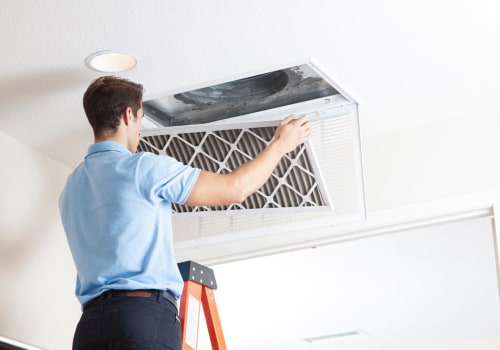
Monthly filter changes during peak cooling
Biannual professional tune-ups
Condensate drain line clearing (critical in Florida humidity)
Coil cleaning to prevent freeze-ups
Typical costs:
Maintenance agreements: $150–$300/year
Emergency repairs avoided: $300–$3,000
Top Takeaways
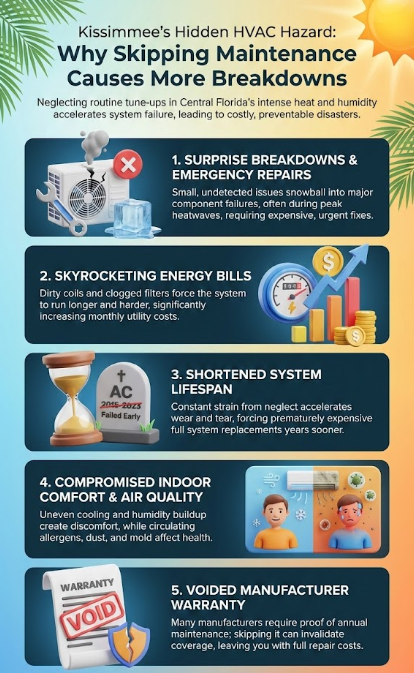
Kissimmee's climate punishes HVAC systems. 150+ days above 90°F and 75%+ humidity means your unit works harder than systems in milder regions.
Skipped maintenance causes predictable failures. Capacitors, coils, and compressors fail in patterns we see repeatedly—all preventable.
Prevention costs less than emergency repairs. Annual maintenance runs $150–$300. Emergency repairs run $300–$3,000.
Verify contractor licensing before hiring. Improper installation cuts efficiency by 30%. Confirm valid Florida Class A or B credentials.
Stack available incentives. KUA rebates, Florida HOMES/HEAR programs (up to $8,000), and federal tax credits (up to $2,000) offset upgrade costs.
Why Neglected Systems Fail Faster in Kissimmee's Climate
Your HVAC system operates under extreme stress here. Kissimmee averages 150+ days above 90°F annually, with humidity regularly exceeding 75%. This combination forces your unit into longer, more frequent cycles than systems in milder climates—accelerating wear on capacitors, compressors, and coils that would otherwise last years longer with basic upkeep.
The failures we see most often trace back to the same neglected maintenance tasks. Dirty evaporator coils freeze over because restricted airflow makes your compressor overwork. Clogged condensate lines back up and trigger safety shutoffs—or cause water damage when they overflow. Worn capacitors fail during peak heat when electrical demand spikes highest. Each issue starts small and fixable but compounds into emergency repairs costing three to five times what a seasonal tune-up runs.
Kissimmee's climate won't let you skip maintenance without consequences. Systems here simply work too hard, too constantly, for neglect to go unpunished. Twice-yearly professional tune-ups catch these problems early, keeping repair costs low and your home comfortable through the brutal summer months.
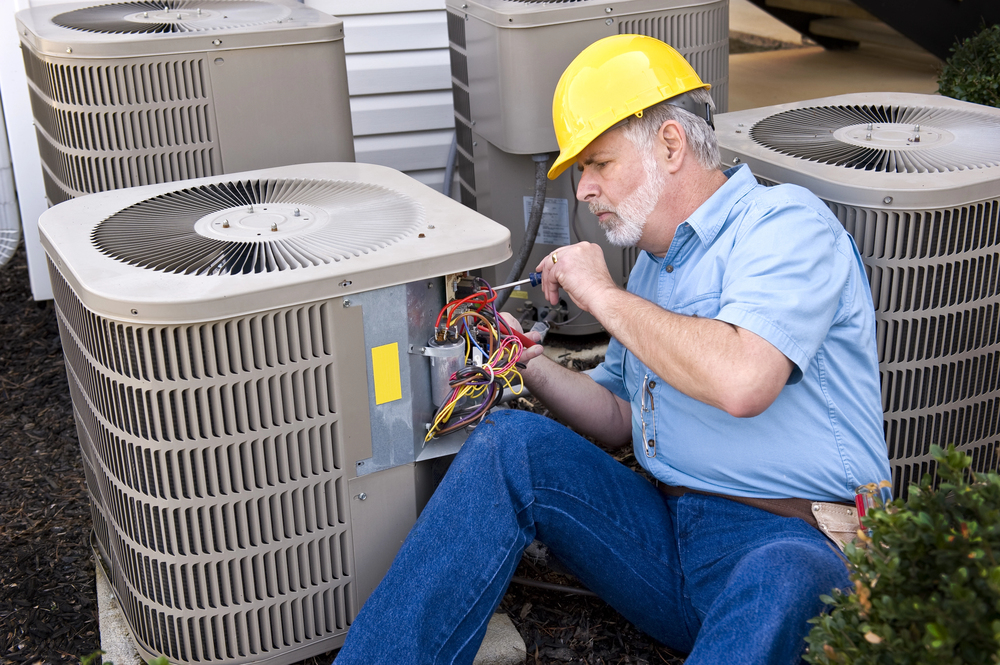
"After servicing thousands of HVAC systems across Osceola County, we've found that nearly every emergency summer breakdown traces back to one skipped spring tune-up—the compressor failures, the frozen coils, the flooded ceilings all start with maintenance that seemed optional six months earlier."
Essential Resources for Kissimmee Homeowners: HVAC Maintenance Decision Guide
Kissimmee Utility Authority: Local Rebates and Energy Audit Programs
KUA offers Kissimmee residents free on-site energy audits that qualify homeowners for HVAC upgrade rebates and provide personalized efficiency recommendations. This local utility resource includes specific guidance on maintenance requirements, seasonal service timing, and incentive programs available exclusively to KUA customers.
Resource: https://kua.com/energy-conservation/energy-wise-tips/heating-cooling/
U.S. Department of Energy: Federal Heating and Cooling Efficiency Standards
The DOE's Energy Saver portal provides authoritative guidance on selecting energy-efficient HVAC systems, understanding efficiency ratings, and implementing maintenance practices that reduce utility costs. Homeowners can access fact sheets, calculators, and step-by-step guides covering everything from proper system sizing to seasonal tune-up checklists.
Resource: https://www.energy.gov/energysaver/heating-and-cooling
ENERGY STAR: Equipment Selection and Tax Credit Eligibility Guide
This EPA-backed resource explains SEER and SEER2 ratings, outlines certification requirements for qualifying equipment, and details federal tax credits up to $2,000 for high-efficiency heat pumps and air conditioners. The guide walks homeowners through evaluating contractor qualifications and ensuring proper installation for maximum efficiency gains.
Resource: https://www.energystar.gov/saveathome/heating-cooling
Florida DBPR: Verify Your HVAC Contractor's License Before Hiring
Florida law requires all HVAC contractors to hold valid Class A or Class B air conditioning licenses issued by the Department of Business and Professional Regulation. This official state portal allows Kissimmee homeowners to verify a contractor's credentials, check for disciplinary actions, and confirm proper insurance coverage before authorizing any work.
Resource:
U.S. EPA: Indoor Air Quality Guidelines for Florida's Humid Climate
The EPA's indoor air quality resource explains how HVAC maintenance in Kissimmee directly impacts respiratory health, mold prevention, and allergen control—critical concerns in Central Florida's high-humidity environment. Homeowners learn proper ventilation requirements, filtration standards, and warning signs that indicate air quality problems requiring professional attention.
Resource:
https://www.epa.gov/indoor-air-quality-iaq/care-your-air-guide-indoor-air-quality
ENERGY STAR Rebate Finder: Locate Kissimmee-Area Incentives by Zip Code
Enter your Kissimmee zip code to instantly discover current rebates from local utilities, manufacturer promotions, and government incentive programs for ENERGY STAR certified HVAC equipment. This searchable database aggregates all available offers in one location, helping homeowners stack multiple incentives to reduce upgrade costs.
Resource:
https://www.energystar.gov/rebate-finder
Florida FDACS: State Energy Rebate Programs Up to $8,000
The Florida Department of Agriculture and Consumer Services administers the HOMES and HEAR rebate programs, offering qualifying homeowners between $2,000 and $8,000 for energy efficiency improvements including HVAC system replacements. Low and moderate-income households may qualify for doubled rebate amounts under these federally-funded state programs.
Resource:
https://www.fdacs.gov/Consumer-Resources/Florida-Energy-Rebates
Supporting Statistics: What the Numbers Mean for Kissimmee Homeowners
43% of Your Energy Bill Goes to Heating and Cooling
The U.S. Department of Energy confirms heating and cooling represents the largest single expense in most homes. In Kissimmee, that percentage often climbs higher during our extended cooling season.
What we see in the field:
Unmaintained systems drive July electric bills 25–40% above normal
Dirty coils, low refrigerant, and clogged filters force overtime operation
A spring tune-up catches these problems before peak summer demand
Source: U.S. Department of Energy
https://www.energy.gov/energysaver/why-energy-efficiency-matters
Americans Spend 90% of Their Time Indoors
EPA research shows indoor pollutant concentrations can run two to five times higher than outdoor levels. Your HVAC system directly controls what your family breathes.
What we see in Kissimmee homes:
Neglected systems allow humidity to exceed 60%
High humidity creates mold growth in ductwork and air handlers
Customers report musty odors and increased allergy symptoms
These issues trace back to systems struggling with Florida's moisture load
Source: U.S. Environmental Protection Agency
https://www.epa.gov/report-environment/indoor-air-quality
Improper Installation Cuts Efficiency by Up to 30%
ENERGY STAR confirms that installation shortcuts reduce system performance from day one. We encounter this regularly on service calls for relatively new equipment.
Common installation problems we find:
Undersized units that run constantly without reaching set temperatures
Poorly sealed ductwork leaking conditioned air into attics and crawlspaces
Incorrect refrigerant charges forcing compressors to overwork
Missed manufacturer specifications that void warranty coverage
The real cost: These issues don't just inflate utility bills—they accelerate component wear and often turn a 12-year system into an 8-year replacement cycle.
Source: ENERGY STAR
https://www.energystar.gov/saveathome/heating-cooling
Final Thought: Kissimmee's Climate Doesn't Forgive Skipped Maintenance
The data tells a clear story. Heating and cooling consume nearly half your energy budget. Indoor air quality depends on properly functioning equipment. Installation shortcuts cost thousands in losses and early replacements.
But statistics only capture part of the picture.
The pattern we see every summer:
Emergency calls spike in July—right when Kissimmee hits its hottest, most humid stretch. The callers share one thing in common: they skipped their spring tune-up. Now they're facing expensive repairs, week-long waits for parts, and houses stuck at 88 degrees inside.
Why Kissimmee is different:
Systems here don't get a seasonal break
Cooling cycles run nine to ten months per year
Relentless demand compresses the timeline for every maintenance issue
Problems that develop slowly elsewhere accelerate rapidly in our climate
What happens when maintenance lapses:
A dirty filter becomes a frozen evaporator coil
A slow refrigerant leak becomes a seized compressor
Minor humidity creep becomes mold growth in ductwork
Gradual capacitor wear becomes a mid-July failure
The habit that prevents emergency repairs:
Homeowners who avoid breakdowns treat maintenance as non-negotiable. Their approach is simple:
Two professional tune-ups per year—spring and fall
Prompt attention to unusual sounds, odors, or performance changes
The bottom line:
Skip the maintenance, and Kissimmee's climate will find every weakness in your system. The humidity, heat, and constant cycling guarantee it. These aren't possibilities—they're certainties we see confirmed on service calls every week.
Invest in prevention, or pay for emergency repairs. In this climate, there's no middle ground.
FAQ on HVAC Maintenance in Kissimmee
Q: How often should I schedule HVAC maintenance in Kissimmee?
A: Twice yearly—spring and fall. Homeowners who follow this schedule rarely need emergency repairs. Those who skip spring tune-ups are the ones calling in July with seized compressors. Kissimmee's nine-to-ten-month cooling season doesn't let systems recover from neglect.
Q: What does HVAC maintenance include in Florida's humid climate?
A: Florida's humidity demands extra attention beyond standard checks. A proper Kissimmee tune-up includes:
Refrigerant level inspection and leak testing
Evaporator and condenser coil cleaning
Condensate drain line clearing and treatment
Capacitor and electrical connection testing
Thermostat calibration verification
We've seen clogged drain lines cause ceiling damage and dirty coils freeze solid after just one skipped season.
Q: How much does HVAC maintenance cost in Kissimmee?
A: Typical costs break down as follows:
Annual maintenance agreements: $150–$300
Individual tune-ups: $75–$150 per visit
Emergency repairs (what you're avoiding): $300–$1,500
Compressor replacement: $1,500–$3,000
We've watched homeowners skip a $175 tune-up only to face $1,400 repairs two months later.
Q: How do I verify an HVAC contractor is licensed in Florida?
A: Visit myfloridalicense.com and confirm valid credentials. Requirements to check:
Active Class A or Class B air conditioning license
Current insurance coverage
No disciplinary actions on record
We've seen unlicensed work result in undersized units, improper refrigerant charges, and voided warranties. Verification takes five minutes and prevents costly mistakes.
Q: Are there rebates available for HVAC upgrades in Kissimmee?
A: Yes. Multiple programs can offset costs significantly:
KUA rebates: Local incentives through free energy audit program
Florida HOMES/HEAR: Up to $8,000 for qualifying improvements
Federal tax credits: Up to $2,000 for high-efficiency equipment
Stacking these incentives often makes premium systems affordable at mid-tier pricing.
Here is the nearest branch location serving the Brickell FL area…
Filterbuy HVAC Solutions - Miami FL
1300 S Miami Ave Unit 4806, Miami, FL 33130
(305) 306-5027
https://maps.app.goo.gl/q4gU8rnsrvsbRFF9A